If you looking for a truly Effective Treatment for Cancer then

Click "Cancer Cure Book"

If you need a solution for Cancer in your life then you must read

"THE CANCER CURE BOOK"

Sunday, January 10, 2010

PSA - what is it?

PSA or Prostate Specific Antigen is a protein which is secreted into ejaculate fluid by the healthy prostate. One of its functions is to aid sperm movement. Normally, only very low levels of the enzyme are able to enter the blood stream. However, because in cancer the normal structure of the tissue is disrupted, considerably more PSA is able to leak into the blood stream, and for this reason, a raised level of PSA in blood (or serum) can indicate the presence of prostate cancer.

Prostate Cancer - the Psa Test Could Save your Life

What is PSA?

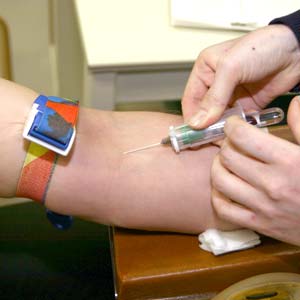
PSA is prostate specific antigen. PSA is a protease (protein) secreted the prostate gland. Its levels in the blood are elevated in men with both benign prostatic hyperplasia and prostate cancer. PSA is now an accepted and routine screening test for prostate cancer.

The PSA Test

PSA presence in the blood is very low, so its detection requires a very sensitive type of technology.

The test uses the monoclonal antibody technique. The PSA protein exists both in the blood by itself, and joined with other substances. By itself, it is free PSA, and joined with other substances, bound PSA.

The term ‘Total PSA’ is the total both forms. The PSA test gives the result of the Total PSA

Results of the PSA Test

The highest normal level of Total PSA is 4 nanograms per milliliter, or ng/mL. Statistics show men’s prostate gland will generally increases in size and produces more PSA with increasing age.

Therefore aging has a great role in the actual results of the test. However, doctors would be concerned with anyone who had a result of over 4.5 ng/mL, and would generally do a biopsy to determine physically if cancer were present

Specific Use of the PSA Test for Cancer

Doctors are using the PSA test now in two ways. First as a screening test to determine elevated PSA levels (which might indicate cancer, but can also indicate other conditions as well), or as a monitor test for those who are known to have prostate cancer.

With the screening technique, any increased levels over 4.5 ng/mL require further investigation. As a monitoring test, high levels of PSA can indicate the growing or reducing threat of cancer.

However an abnormal result also can indicate a recurrence of prostate cancer following therapy.

For example, in men with a surgically removed prostate gland (prostatectomy), where all of the cancer was contained, a PSA test should result in 0. However, if in these men the PSA test is positive or shows increasing levels, it shows the cancer was not successfully removed and / or it has spread.

PSA Also Can Show Non-Cancerous Conditions

The PSA test result can indicate conditions other than cancer.

Often a higher PSA test result indicates benign prostatic hypertrophy, which his enlargement or hyperplasia of the prostate gland. These conditions are due to an increase aging in certain men.

Also infection of the prostate gland, known as prostatitis, will cause an abnormal elevation of PSA.

There are other conditions also which can result in higher levels of PSA that are non-cancerous.

In each case however, the doctor will first perform a biopsy to determine if cancer cells are present.

The Free PSA Test

Free PSA in the blood exists as well as bound PSA, and there is now a test for Free PSA. Studies have shown that levels of free PSA decrease in men with prostate cancer.

The Free PSA levels in men with benign conditions will not decrease. Levels of Free PSA differ from test procedure to test procedure, but in any case, it is a good indication of the presence of cancer if the levels are shown to be decreasing.

Who Should Test for PSA

Any many over 40 years old now should test for PSA. Every man over 50 must test for PSA to insure that if there is a problem, it can be treated early. Consult your physician if this article concerns you.

Saturday, January 9, 2010

Other forms of PSA testing

New forms of the PSA blood test make it more accurate in diagnosing prostate cancer. One such test is the ‘free to total’ PSA test. In both healthy men and those with prostate cancer, the prostate specific antigen in the bloodstream latches onto protein. In men with benign prostatic enlargement, the prostate specific antigen tends to be free of protein.

The ‘free to total’ PSA test compares the amount of ‘bound’ to ‘unbound’ PSA to see whether the raised levels are caused by prostate cancer or benign disease. The probability of cancer is higher if the ‘free to total’ ratio is less than 20–25 per cent.

The rate of change of PSA (PSA velocity) can also be helpful in finding prostate cancer. In men with PSA above 4ng/ml, a velocity of greater than 0.75ng/ml/yr is thought to indicate a higher risk of cancer. This threshold may be lower in men with a PSA below 4ng/ml.

Monitoring cancer

After a diagnosis of cancer, regular PSA blood tests are also used to monitor the cancer activity in a man’s body. Generally, prostate cancer prompts higher and higher levels of blood-borne PSA as it grows. Regular blood tests can indicate whether the tumour is shrinking or enlarging and if the current treatment is working or not.

Where to get help

* Your doctor

* Urologist

* Cancer Council of Victoria, Information and Support Service Tel. 13 11 20

Things to remember

* A normal prostate gland secretes small amounts of a protein called prostate specific antigen (PSA) into the ejaculate and blood.

* Prostate cancer usually causes large amounts of PSA to enter the blood.

* The PSA blood test can detect prostate cancer at an early stage, before it causes symptoms and when it can be removed.

* An abnormal PSA test result can have a number of non-cancer causes. Other tests are needed to confirm the diagnosis.

* Prostate cancer testing and treatment is less likely to have a benefit in older men, particularly those over the age of 75 years.

Prostate cancer and the PSA test

A PSA blood test can be used to help diagnose prostate cancer at an early stage, before it causes symptoms and when it can be removed. The normal prostate gland makes a protein called prostate specific antigen (PSA). This protein helps to nourish sperm and only tiny amounts of PSA leech into the bloodstream. However, cancer cells in the prostate interfere with proper functioning and cause large amounts of PSA to enter the blood.

When high levels of PSA are detected in the bloodstream, this may indicate cancer. Other tests are needed to confirm the diagnosis, however, because an abnormal PSA test can have a number of non-cancer causes.

Normal PSA levels

The prostate slowly enlarges with age and the production of PSA will also rise. Generally, the healthy upper limits of PSA levels in the blood increase with age. One study suggests they may be between 2 and 5.6ng/ml (nanograms per millilitre) in men over 40 years. It is usually recommended that a PSA greater than 4ng/ml should be followed up with further tests.

Other factors that influence PSA levels

Prostate cancer is diagnosed using a range of tests, including the PSA blood test. The PSA blood test isn’t conclusive. It is possible, although rare, to have prostate cancer without raised PSA levels in the blood. A higher than normal PSA level doesn’t automatically indicate prostate cancer either. A high PSA level is due to cancer in around one in three cases.

PSA can be raised by other factors, including:

* Infection of the prostate (prostatitis)

* Benign prostatic enlargement (BPE).

For this reason, the PSA blood test isn’t used in isolation when checking for prostate cancer.

Tests – apart from PSA

Other diagnostic tests for prostate cancer include:

* Digital rectal examination (DRE) – the doctor feels for enlargement of the prostate gland or other changes.

* Biopsy – small samples of tissue are removed from the prostate and examined.

If cancer is diagnosed, further tests may be needed to determine the stage of progression of the cancer. These may include a bone scan, a computed tomography (CT) scan or a pelvic lymph node dissection.

Tuesday, January 5, 2010

Just say no to the PSA prostate cancer test.(prostate-specific antigen)

"Studies Fail to Settle Prostate Screening Debate" (Boston Globe); "Prostate Screening Saves Lives" (BBC). "Prostate Cancer Screening May Not Reduce Deaths" (Washington Post).

These are just some of the headlines for the big health story last month about the PSA (prostate-specific antigen) screening blood test. The results from two long awaited clinical trials were released early and simultaneously by The New England Journal of Medicine on March 18. Despite the seemingly conflicting messages of these sample headlines, it is now clear that symptomless men should consider refusing this test.

The larger of the two trials was conducted in several European countries. It found that the lifesaving benefit of PSA screening is far more modest than previously thought ... and the risk of harm is very high. For every 1,400 men who regularly had a PSA screening test over the ten-year period of the European trial, one man avoided death from prostate cancer and 47 men were treated unnecessarily for a cancer that did not progress. The risks of treatment include urinary incontinence, bowel problems, and impotence. Otis W. Brawley, MD, chief medical officer of the American Cancer Society, summed up the findings this way: "The test is about 50 times more likely to ruin your life than it is to save your life."

The other trial was U.S. government-funded and, unlike the European trial, it showed no reduction in prostate cancer deaths. The predictable and disturbing finding from both trials is this--many more prostate cancers were diagnosed in the men who were screened with the PSA test than in those who were not. Few men opt for the "wait and see" approach once a PSA test, biopsy and other tests indicate the presence of cancer.

The debate over the PSA test is expected to continue, largely because flaws can be found in virtually all trials. For example, the U.S. trial had less than half the number of participants of the European trial (162,000), which some believe may account for the absence of a lifesaving benefit. In the U.S. trial, men were randomly assigned to annual PSA tests plus a digital rectal examination (screened group) OR what is known as usual care.
Given the fact that the PSA test has been aggressively marketed as a lifesaving test to doctors and the general public for the last 20 years, usual care in the U.S. involves a doctor recommending a PSA test. It is considered unethical to ask men in the unscreened control group not to have a PSA, and a large portion of them in the U.S. trial-38% to 52%--had the test. Western European countries put up barriers to the marketing of an unproven test to the public. In the U.S., most men over age 50 have regular PSA tests; in the U.K., where the National Health Service does not recommend PSA testing, only about 6% of men have had a PSA test because they requested one.

Treatment-Related Deaths?

There was a troubling finding from the U.S. trial that did not get media attention last month--it involves the deaths from the prostate cancer treatment itself. When the authors of this trial looked solely at the participants who had been diagnosed with prostate cancer in the 10-year period of the trial, there were 312 men in the PSA screening group and 225 men in the unscreened control group who had died from causes other than prostate cancer. The unexpectedly higher number of deaths in the screened group, say the authors, is "possibly" related to treatment of non-progressive cancer.

The question that no one seems to be asking at this time is: Why was the PSA screening test allowed to become so widespread when it cannot identify which prostate cancers are aggressive and lethal? And no test currently exists that can make that distinction accurately.

Cancer screening tests are approved by the FDA on the basis of an outdated understanding of cancer, i.e. all cancers are deadly; finding cancer early is always good. All a company has to do is prove its product can find symptomless cancer. The success of any screening test, however, should not be based on how many cancers it can find but how many deaths can be avoided. And most important, the chance of avoiding death should be far greater than the chance of serious harm as a result of the test itself. The PSA screening test fails on both counts.

What to do:

-Read more about the U.S. trial at the Web site of the National Cancer Institute which is its sponsor. See the press release entitled, "U.S. Cancer Screening Trial Shows no Early Mortality Benefit for Annual Prostate Cancer Screening" (www.cancer.gov/newscenter). Free access to both trials at the New England Journal of Medicine Web site (www.nejm.org). See the March 26, 2009 issue.

-Inform yourself. Try to get as much information about prostate cancer, early detection, and the PSA test from sources other than hospitals and doctors who treat prostate cancer. The National Cancer Institute is one place to start (www.cancer.gov).

-Be aware of the fact that some men are given the PSA test without their knowledge. It is often automatically added in with the standard blood test for cholesterol, etc. If you decide to forego a PSA test, make your wishes known before you are given a blood test.

-Recognize that fear-mongering with statistics is essential to cancer screening promotion. Prostate cancer may in fact be the second leading cause of cancer death in men, but it accounts for only 3% of all deaths. No prostate screening campaign is likely to flip that statistic around to tell men that 97% of them will not die of prostate cancer. And the 20% reduction in prostate cancer deaths shown in the PSA screened group in the European study. Here's what it means: The man who regularly has a PSA test over the course of the next ten years will reduce his risk of dying of prostate cancer from 3% to 2.4%.